WRITING / AI & WORK
I use AI every day. I still own the decision.
The tools can help me produce more. My name on the work still means I am responsible for what leaves the room.
I use AI. A lot.
I am interested in what it can help me make, understand, test and improve. I have no desire to turn doing everything the slower way into a moral achievement.
But when work leaves under my name, I cannot point at a tool if the thinking is weak.
The client hired me. The reader is reading me. The decision is still mine.
That is where I think much of the AI conversation becomes unhelpful. People argue about whether using it counts as real work, while the more useful question is whether the work deserves to be used.
A convincing answer can still miss the point
Suppose you ask for a marketing plan for a restaurant.
You may receive a detailed answer with channels, content ideas, offers and a tidy calendar. It looks like a plan. It may contain several sensible suggestions.
But perhaps the restaurant is already busy and the owner is losing money on every delivery order. Perhaps the real problem is that people try it once and do not return.
More activity could be the wrong response.
I want to establish what we are trying to change before deciding what to produce. That involves questions, actual business information and a willingness to discover that the original brief was pointing in the wrong direction.
AI can help explore the possibilities. It does not relieve me of checking which possibility fits the situation.
IF MY NAME IS ON IT, THE RESPONSIBILITY IS MINE.
Faster work still needs a standard
The standard should not collapse because a draft arrived quickly.
If the copy makes a factual claim, I need a source. If an image is supposed to represent a real product, I need to check whether it does. If a recommendation depends on an assumption, that assumption needs to be visible.
And if the writing sounds polished but could belong to absolutely anyone, it needs more work.
This is especially important with a personal brand. You can fill a website with sentences about authenticity while removing every opinion that would let someone recognise you. Producing those sentences faster does not fix the contradiction.
I would rather publish one piece I can stand behind than ten that merely look finished.
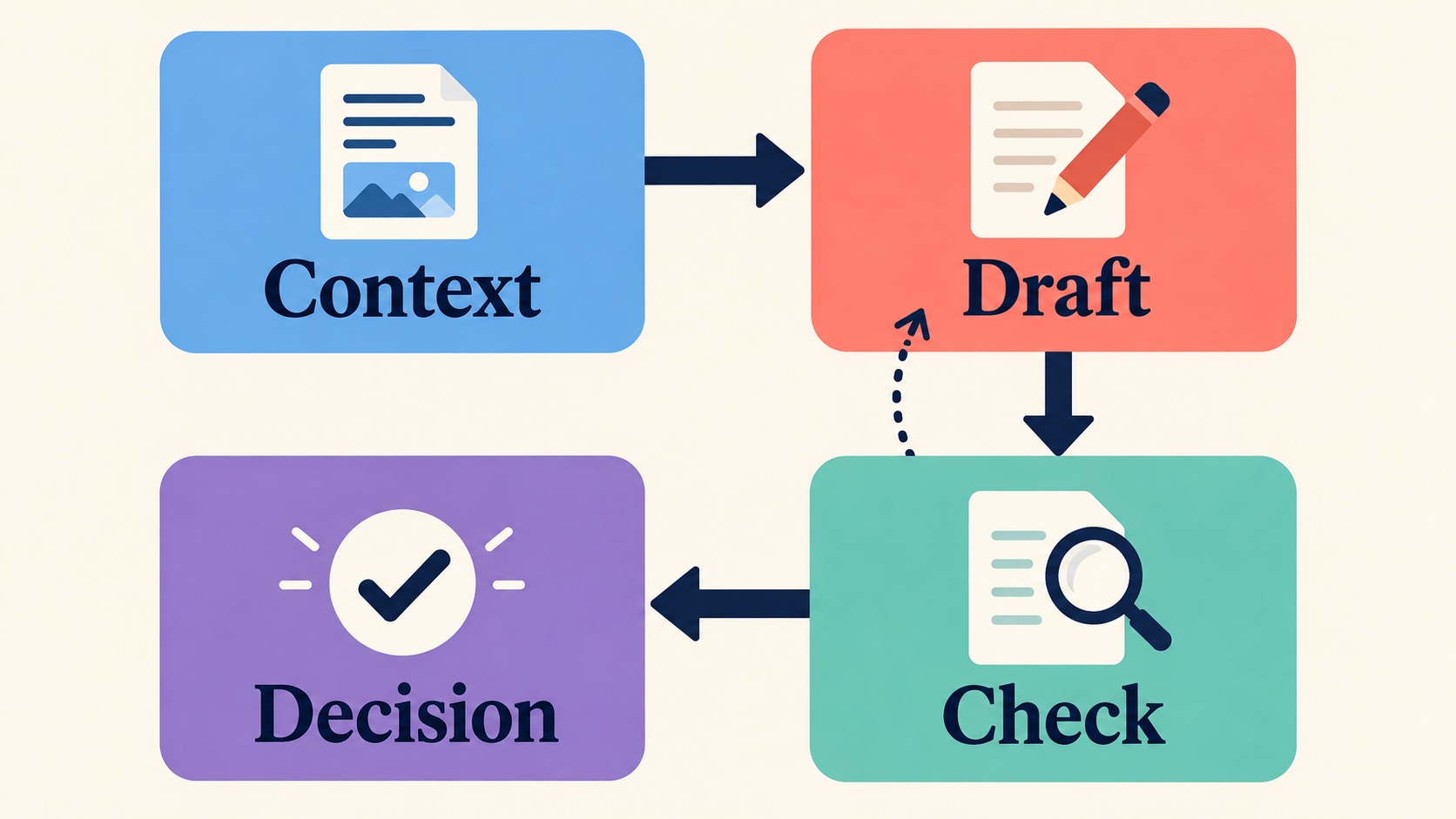
The workflow I would recommend is straightforward. Establish the context. Use the tool to develop a draft or explore options. Check the facts and challenge the reasoning. Make the decision about what stays.
Sometimes the useful outcome is realising that the first idea should be thrown away.
Make room for the work that needs you
There is a good opportunity here. Time saved on repetitive production can go into asking better questions, reviewing the details and speaking to the people affected by a decision.
That only happens if we choose to use the time that way.
Otherwise we simply produce more things to review, more messages to ignore and more confident language around unresolved problems.
I am excited about these tools. I also expect anyone using them professionally to take their work seriously.
What part of your work would benefit from being faster.. and what part still needs more of your attention?
NADER UNFILTERED
If this argued with something you believed, good. One email like it whenever there is something worth sending.. never on a schedule.
 Nader alMaleh
Twenty years. Six countries. 400+ businesses.
Nader alMaleh
Twenty years. Six countries. 400+ businesses.